She discovered phonics while teaching her daughter during lockdown. What followed was a certification program, a national community, and a career path that is changing how Indian women think about financial independence.
Mumbai: Most Indian parents know what JEE and NEET are. Very few know what phonics is — and almost none know that structured early literacy can increase a child's IQ by up to sixty-two percent. Alka Gupta Sawant discovered this as a new mother, acted on it during a lockdown, and built a career and a community around it.
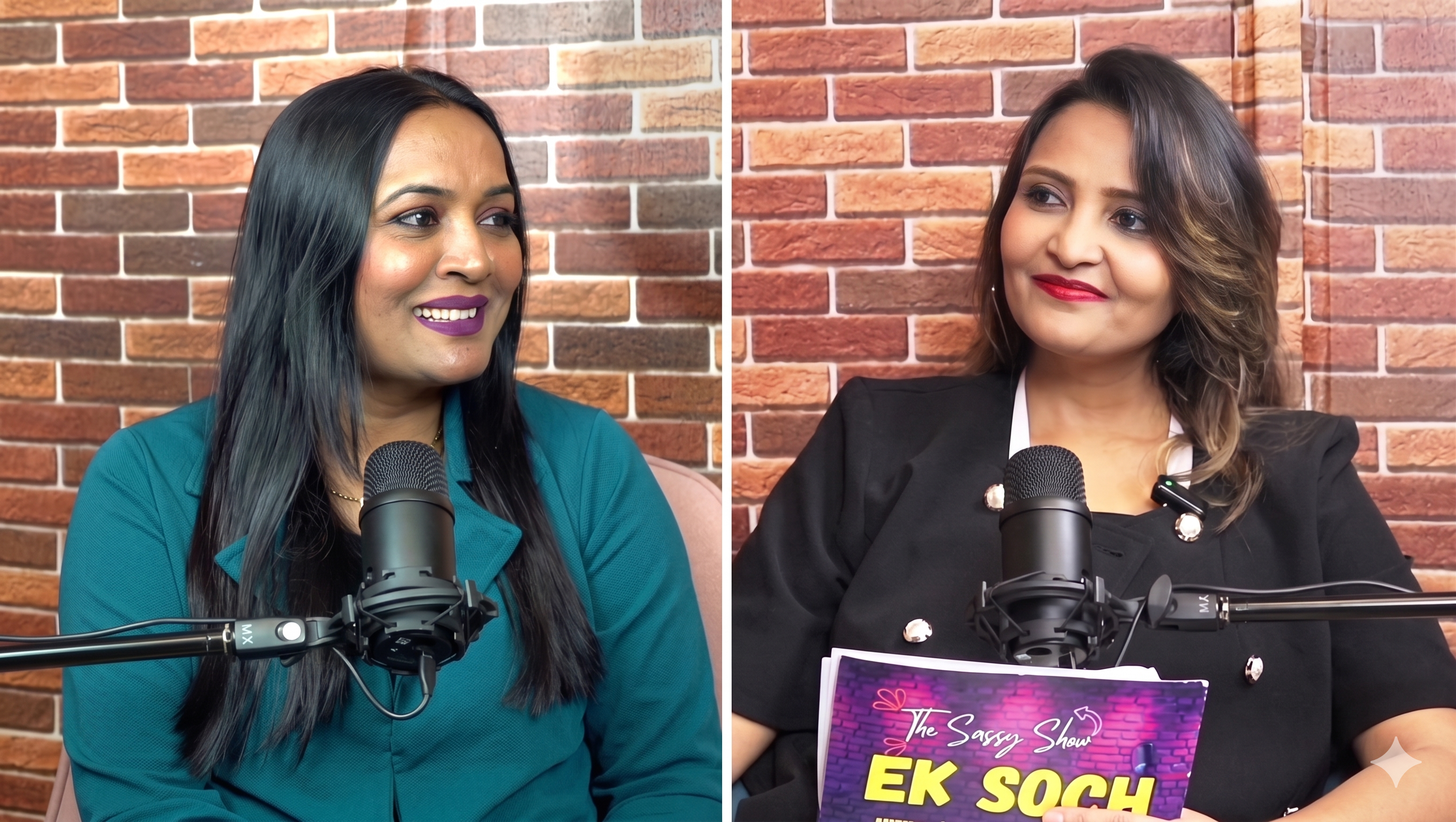
In a recent conversation on the Ek Soch Podcast with host Nirale Pandya, Alka — founder of Phonics Ki Pathshala and a former corporate professional — walked through what phonics actually is, why India's education system consistently gets early literacy wrong, and how a skill learned in two hours a day can generate between forty thousand and one lakh rupees a month for women who choose to teach it.
"She discovered phonics while teaching her daughter during lockdown. What followed was a certification program, a national community, and a career path that is changing how Indian women think about financial independence."
The Discovery That Changed Her Direction
Alka Gupta Sawant's path into phonics education did not begin with a business plan. It began with a fact she encountered as a mother — that early literacy, structured reading and writing introduced at the right developmental stage, can increase a child's IQ by up to sixty-two percent.
The statistic stopped her. She had spent years in a corporate career, but this was information that changed the frame of what mattered. During the lockdown, she began teaching phonics to her own daughter. The results were visible quickly enough that other parents started asking questions. Those questions became informal sessions. The informal sessions became structured classes — first offline, then through Instagram, then through Zoom as the reach expanded beyond what geography could contain.
The business was not designed. It emerged from a mother acting on something she believed was important, and other parents recognising the results.
"Financial independence is not only for women who need money. It is essential for every woman, regardless of circumstance."
What Phonics Actually Is — and What Most People Get Wrong
Alka addresses a misconception that shapes most Indian parents' understanding of the subject before she can have a real conversation about it.
Phonics is not primarily about sounds. Sounds represent approximately ten percent of what the discipline covers. The remaining ninety percent is syllable division and spelling rules — the structural logic of how the English language encodes meaning into written form, and how a reader learns to decode that structure fluently rather than memorising words individually.
Phonics teaches two distinct but related skills: decoding, which is reading by blending sounds into recognisable words, and encoding, which is spelling by breaking words into their constituent sounds. A child who has been taught both can approach an unfamiliar word — in reading or in writing — with a systematic method rather than a guess. A child taught to memorise word shapes alone has no method when the shape is unfamiliar.
"International schools teach phonics through Grade Five. India has acknowledged this in principle — NEP has mandated phonics-based teacher training — but implementation remains significantly behind the policy commitment."
What India's Education System Keeps Getting Wrong
Alka's critique of Indian early education is specific and consistent with what others working in early childhood development observe.
Indian schools place disproportionate emphasis on writing from the earliest ages — on the physical act of producing letters and words on paper — before children have developed the phonemic awareness and decoding ability that makes reading and writing meaningful rather than mechanical. The result is children who can copy text without comprehending it, who associate literacy with performance rather than understanding, and who enter higher grades without the foundational reading fluency that everything else depends on.
The broader Indian education mindset reinforces this at home. Parents track grades and competitive exam preparation — JEE, NEET, board percentages — with an attention that leaves very little room for the question of what a child is naturally drawn to, what they are genuinely curious about, or what kind of work would actually make them effective and fulfilled.
"The system produces candidates. It should be producing people who can create opportunities rather than compete for the fixed number of existing ones."
The Certification Program She Built Around Rigour
Phonics Ki Pathshala's certification is not a weekend course. Alka is deliberate about this distinction because the phonics education space in India has accumulated a significant number of shallow credentials that do not actually equip teachers to deliver results.
Her program covers nine deep-dive topics across weekly live sessions of two to two and a half hours each, supported by pre-recorded modules for self-paced learning and doubt-clearing sessions every Monday. The certificate is awarded only after every project within the program has been completed — not after attendance, not after payment, after demonstrated completion of the work.
"A phonics teacher who does not understand the subject deeply enough to answer a parent's specific question is not equipped to charge for the service or to build the reputation that generates referrals."
What a Phonics Teacher Can Actually Earn
Alka presents the financial case for phonics teaching with specificity that most skill-based education programs avoid.
A phonics teacher working two hours per day, running small batches of students, can earn between forty thousand and one lakh rupees per month. The business model requires no inventory, minimal startup investment, and operates at effectively one hundred percent profit margin once the initial certification cost has been recovered.
She outlines six distinct career paths available from a single phonics qualification: teaching your own child and saving the cost of external tutoring, taking jobs in schools, adding phonics to an existing home tuition practice, running independent home-based classes, entering profit-sharing arrangements with pre-primary schools, and teaching international students online. The same certification opens all six doors.
- Teaching your own child — save on external tutoring costs
- School jobs — certified teachers are in demand
- Home tuition add-on — expand an existing practice
- Independent home-based classes — full ownership, high margin
- Pre-primary school profit-sharing — institutional reach without overhead
- International online students — diaspora communities in Dubai, Australia, Canada
The Self-Doubt That Stops Women Before They Start
Alka identifies a pattern she encounters consistently among the women who come to her interested in phonics teaching but uncertain whether they are credible enough to do it.
The question she hears most often is: why would anyone listen to me?
Her answer is not reassurance. It is diagnosis. The question, she argues, is not a reflection of genuine incapability — it is a product of social conditioning that has taught women to treat their own knowledge and perspective as inherently less authoritative than someone else's, and to require external validation before they can claim expertise they have genuinely developed.
"Social media is not a performance platform. It is a lead generation machine. Consistency across one hundred to two hundred videos builds trust that converts viewers into students."
Community as the Long-Term Asset
Alka draws a distinction between what she offers and what most online courses offer, and the distinction is structural rather than about content quality.
A course ends. A community continues. Phonics Ki Pathshala's certification comes with lifetime membership in the India Phonics Community — WhatsApp support, ongoing weekly live sessions, and a peer network of teachers who are at different stages of building their own practices and who actively help each other solve the problems that come with running an education business.
The community model means that a teacher who certifies today and begins teaching next year is not doing so alone. She has access to the accumulated experience of everyone who certified before her, and she becomes part of the accumulated experience available to everyone who certifies after. The learning compounds across the community rather than being isolated to individual transactions.
The Two Hours She Asks Every Woman to Reclaim
Alka's closing message is direct and without abstraction.
The average Indian woman spends significant time daily on social media — consuming content, watching reels, following accounts. That time is not producing anything. Two hours of that time, redirected toward learning a skill and then learning how to monetise it, is the entire investment required to begin building financial independence through phonics teaching.
"Believe in yourself, show up consistently in digital spaces with what you know, and the audience that wants what you offer will find you. The knowledge gap is smaller than most women think. The consistency gap is where the real work happens."
Nirale Pandya
Entrepreneur | Podcaster
"I help businesses grow through strategic PR, Branding, Business Consultation, Social Media Management, Digital Marketing, and Podcasting."
📅 Book a One-to-One Business Consultation:
Schedule Your Session🔗 Connect With Me
Published: Apr 14, 2026 | Category: Podcast