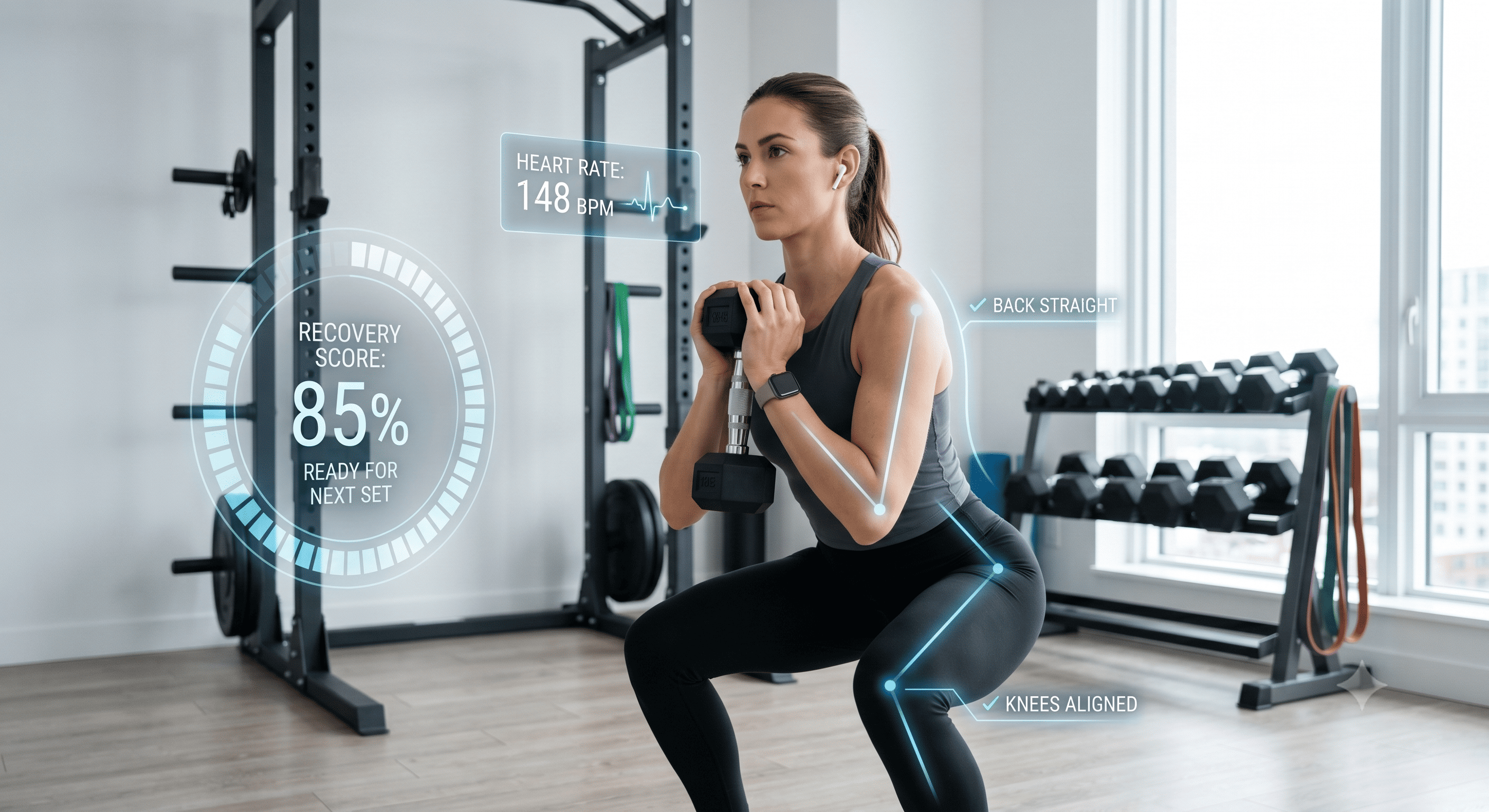
The fitness industry is going through its biggest shift since the invention of the home gym. In 2026, artificial intelligence is no longer a novelty feature in workout apps — it is the backbone of how people train, recover, and think about their health. According to the American Council on Exercise, AI is the leading health and fitness trend this year, and the reason is simple: it turns data into action.
1. The End of Generic Workout Plans
For years, fitness apps offered static routines. You picked a goal — lose weight, build muscle, run faster — and received a pre-written plan that treated everyone the same. AI has killed that model. Modern fitness apps now analyze your performance history, sleep quality, heart rate variability, and fatigue signals to build dynamic workout plans that change in real time.
When the system detects you are under-recovered, it lowers intensity automatically. When you are progressing fast, it pushes load progressively. This is not just tracking. It is programming.
2. Wearables That Actually Think
Wearables have moved beyond counting steps. Devices in 2026 continuously monitor HRV, sleep stages, respiration, stress markers, and movement patterns. The difference now is that AI processes this raw data and translates it into actionable guidance — flagging injury risk before it happens, predicting fatigue, and recommending optimal load or rest days.
The shift is from "here is what you did" to "here is what you should do next."
3. Smart Equipment Becomes the Coach
The global smart fitness market is projected to reach $42.15 billion in 2026, growing at nearly 26% annually. The reason is that equipment itself is getting intelligent. AI-powered treadmills, bikes, and strength trainers now use computer vision to analyze your form in real time, correcting joint angles and stability issues as you move.
Some systems adjust resistance dynamically based on your fatigue levels. Others build comprehensive health profiles over months of use, creating long-term training strategies rather than isolated workouts.
4. Recovery and Longevity Enter the Mainstream
AI is expanding fitness beyond the workout itself. Recovery methods — once an afterthought — are now a major trend, with AI-powered robotic rollers and massage tools that auto-map the body and deliver adaptive treatment.
Longevity is another focus area. AI-driven tools analyze metabolic health, physiological age, and cognitive decline risk, turning fitness into a preventive health strategy rather than just an aesthetic pursuit.
5. The Human Coach Is Not Dead
The most important misconception about AI in fitness is that it replaces human coaches. The reality is the opposite. AI democratizes access to expert-level guidance — offering localized language support, culturally appropriate nutrition advice, and low-cost coaching integrations — while human professionals handle motivation, accountability, and complex judgment calls.
In India and other markets, this hybrid model is making quality fitness guidance accessible far beyond metro cities.
6. What This Means for You
If you are still using a static workout log or a basic step tracker, you are working with tools designed for 2020. The new standard is adaptive, personalized, and predictive. Start small: try an AI-powered workout planner, begin tracking recovery metrics like HRV, and treat your fitness data as a programming input rather than a scoreboard.
The future of fitness is not about working harder. It is about working smarter — and AI is the tool that makes that possible.