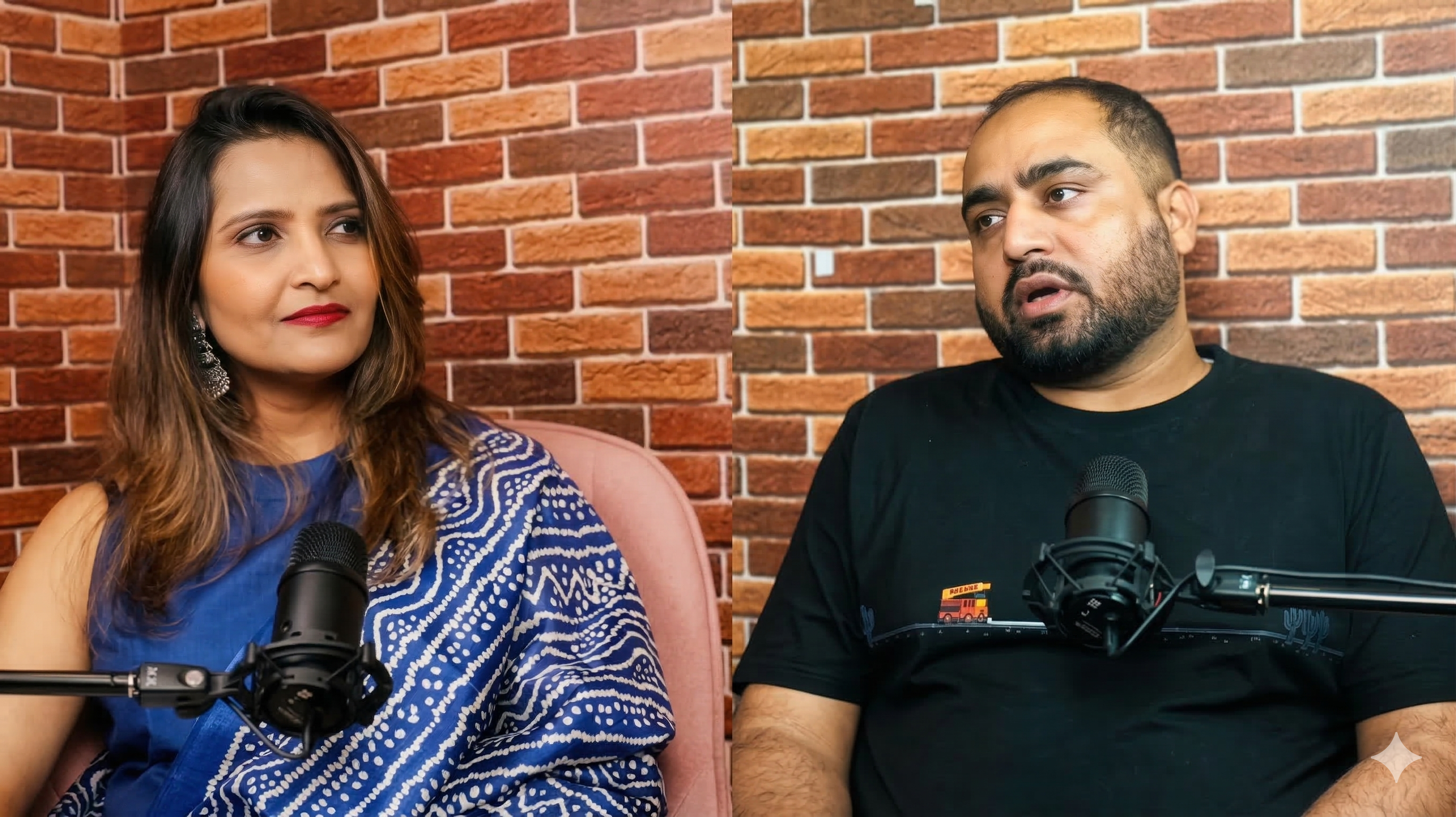
Fire safety entrepreneur Shivam Firewala breaks down India's biggest fire safety myths, laws, and life-saving steps in a candid conversation on Ek Soch Podcast.
Pune: Most Indian households have a first aid kit. Almost none have a fire extinguisher. Shivam Firewala wants to change that — and he has the data, the incidents, and the urgency to make the case.
In a recent conversation on the Ek Soch Podcast with host Nirale Pandya, Shivam Devghare — fire safety entrepreneur, content creator, and founder of a Pune-based fire safety business — laid out with striking clarity why fire safety remains India's most ignored life skill, and what every household can do about it today.
"The man making India take fire seriously — one extinguisher, one conversation at a time."
From Business to Content, and Back Again
Shivam did not set out to become a content creator. He began making fire safety videos purely for visibility — to put his business in front of more people. What changed his approach was something simpler: personal messages from strangers telling him his content had helped them.
That feedback made it a passion. Balancing content creation with running a fire safety business remains a daily challenge, he says, but the reach it creates for awareness makes it non-negotiable.
India's Biggest Fire Safety Problem Is Not Equipment
Awareness has improved in the last five to seven years, driven partly by rapid urbanisation. But the core mindset barrier remains unchanged across the country: the quiet, deeply held belief that fire will not happen at my place.
This attitude is why fire safety is treated as an additional cost rather than a life skill. People do not invest in prevention. They only take fire seriously after experiencing an incident — at which point, their perception changes permanently.
"The tragedy is that the incident itself is preventable."
What Every Home Needs Right Now
Shivam's most direct recommendation is simple: every household should own a basic ABC-type multi-purpose fire extinguisher. The cost is between ₹1,500 and ₹2,000. Maintenance is required only once every five years. For the price of a restaurant meal, a family has a tool that can contain a kitchen fire before it destroys an entire home.
He also recommends a fire blanket as the single most affordable and accessible addition to any household — his closing message to every viewer of the episode.
"₹1,500 for an extinguisher. That is the price of a life skill most families are missing."
The Incidents That Make the Case
Two documented incidents from Shivam's experience illustrate the stakes clearly.
In the first, an elderly woman was home alone when her washing machine caught fire. With no equipment and no training, she could not contain it. The fire destroyed the entire house. She survived — but only barely, and only by luck.
In the second — the more remarkable story — school-trained children extinguished fires in residential buildings where adult residents had no idea how to operate the fire systems around them. Children, trained at the grassroots level, saved lives that adults could not.
What To Do When Fire Breaks Out
Shivam walks through a clear, step-by-step emergency response that most people have never been taught:
- Activate the manual call point — the red box on the wall with a breakable glass panel
- Use fire exits immediately, ensuring they are never blocked in daily life
- Secure yourself and others first
- Only if the fire is small and contained — attempt to fight it with an extinguisher
- If not contained, call the fire brigade without hesitation
Every property should have three core systems: portable fire extinguishers, a fire hydrant system, and a fire alarm system. Sprinkler systems are the gold standard — but only if regularly maintained.
The Hidden Danger Nobody Talks About
Fire itself is not always what kills people. Modern construction materials — plywood adhesives, PVC pipes, POP ceilings, synthetic plastics — release toxic chemical fumes when they burn. Many fire fatalities are caused by suffocation from these chemicals, not direct contact with flames.
Shivam's advice: keep interiors as simple and clutter-free as reasonably possible. Every additional combustible material adds to what fire safety standards call fire load — calculated by dividing the total calorific value of combustible materials in a space by the property's area. The National Building Code of India uses this metric to assess how dangerous a given space is in a fire scenario.
"It is often not the fire that kills. It is the air."
The Law, the Industry, and What's Coming
Maharashtra mandates a minimum six-month maintenance cycle for fire safety systems. Nationally, the National Building Code Part 4 governs installation and maintenance standards, while NFPA covers international compliance benchmarks.
The Indian fire safety industry is larger than most people realise — some companies operate at turnovers exceeding ₹100 crore — yet remains almost entirely invisible in public conversation. Technology is also transforming the field:
- AI-powered flame detection cameras
- QR-code-based extinguisher maintenance tracking
- Flexible auto-activation suppression tubes for car engine bays
- Robotic firefighting systems in development
Shivam's goal for 2026: bring fire safety into mainstream public conversation through content, awareness, and industry streamlining.
The One Thing Every Household Should Do
Shivam's closing message to every person watching the episode was not about systems, laws, or industry reform. It was one sentence:
"Buy a fire blanket."
Simple, affordable, and potentially the difference between a contained incident and a destroyed home.
Nirale Pandya
Entrepreneur | Podcaster
"I help businesses grow through strategic PR, Branding, Business Consultation, Social Media Management, Digital Marketing, and Podcasting."
📅 Book a One-to-One Business Consultation:
Schedule Your Session🔗 Connect With Me
Published: Mar 18, 2026 | Category: Podcast