Mumbai: Most entrepreneurs follow a familiar path to their first business: they identify a gap in an established market, they raise capital from investors, they launch a branded experience in a premium location, they hope the market recognises what they have built. Sameer Dave followed none of these steps. He identified a category that barely existed in India, he borrowed ₹5 lakhs from a bank, he set up a kiosk on the street without branding or signage, and he stood there for six hours a day watching people call his product by the wrong name.
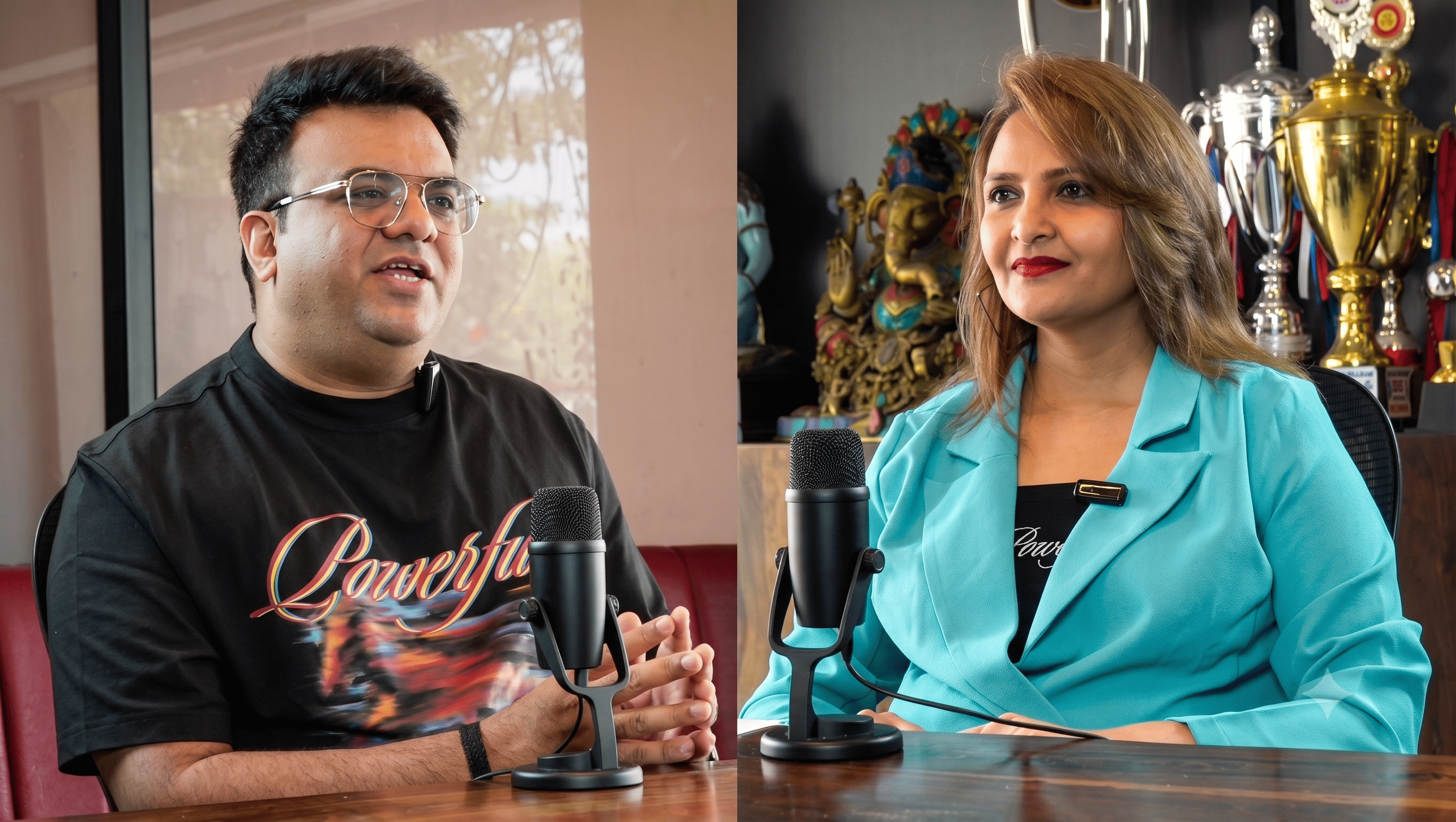
That observation — that people did not know what a waffle was — became the foundation for everything that followed. In a recent conversation on the Ek Soch Podcast with host Nirale Pandya, Sameer Dave — founder of Cornical Gofers and builder of India's fastest-growing waffle quick-service restaurant chain — walked through his journey from corporate insurance job to street-level entrepreneur, how a single observation about a rickshaw driver's hesitation led to a product innovation that scaled to 120 franchises in two years, and why the entrepreneurs who obsess over direct observation rather than over data are the ones who actually build lasting businesses.
"He had a ₹5 lakh bank loan and an idea nobody in India was executing. Two years later, 120+ franchises and counting. The secret was not the product. It was the permission he gave himself to fail on a street corner."
The Corporate Insight That Became a Business
Sameer Dave's entry into entrepreneurship was not driven by a childhood dream or by frustration with a specific problem. It was driven by observation and travel.
While working in corporate insurance, his job involved international travel. During these trips, he noticed that waffles were a staple breakfast item: eggs, banana, honey, dark chocolate. They were consumed routinely, without fanfare, as everyday food. But when he looked at India's quick-service restaurant landscape, waffles barely existed. There was ice cream, there were pastries, there were desserts — but not waffles.
The insight was not profound. But it was specific: a new category was forming in India. Waffles were being positioned as desserts and snacks rather than as breakfast. And nobody was executing at scale.
His wife worked in operations and administration — never customer-facing, never thinking of herself as a business person. When Sameer decided to start a business, they made a practical choice: she would quit her corporate job and build it, while he kept his salary to fund their living. They took a ₹5 lakh bank loan. That was the capital they had to work with.
Six Months of Obsession: Building the Product
Sameer and his wife spent six months at home perfecting a single product: a chocolate-dipped stick waffle.
His wife had expertise in chocolate tempering from personal interest. Sameer had the vision for the product. Together they iterated obsessively — adjusting texture, chocolate coating, portion size — until they had something they believed was ready.
The market did not have premixes for waffles that met their standard. Indian waffle premixes were not available at the scale and quality they needed. So they built their own premix blend in-house, learning formulation in the process.
This product development was not based on focus groups or surveys. It was based on Sameer's observation of what he had consumed internationally and his belief that if they got the product right, the market would recognise it. The six months of home-based iteration was the price of that certainty.
The Street Kiosk: Product-Market Fit Happens in Mass Market
Sameer's first operational location was not a branded store. It was a street kiosk.
The initial launch involved dealing with municipal hurdles, obtaining hawker licenses, navigating bureaucratic friction. His wife stood at the stall for six hours a day watching customers. The first reality check came immediately: people did not know what a waffle was. They called it kulfi. They called it other names. The product was unfamiliar.
This moment revealed a fundamental insight that most entrepreneurs miss: product-market fit is not something that happens in a niche or with early adopters who already understand your category. Product-market fit happens in mass market, where most people have never heard of what you are selling.
Sameer's first job was not to prove the quality of his waffle. It was to create awareness that waffles existed as a category. Every transaction was also an education. He was not running a business. He was running a market-creation exercise.
The Rickshaw-Wala Moment: When Niche Reveals Exclusion
A single observation changed the entire trajectory of the business.
A rickshaw driver approached the stall with his two children. He looked at the menu. The stick waffles were priced at ₹200 each. For two children, that meant ₹400. He hesitated visibly and walked away.
Sameer watched this moment and recognised what had happened. He had built a product for a niche market — people willing to spend ₹200 on a dessert. But the mass market was not niche. The mass market included rickshaw drivers with two children who could not afford ₹400 for a treat.
He spent the next six months on a different kind of product development: creating a Mini Waffle. Fifty grams instead of one hundred. Priced at ₹50 to ₹130 instead of ₹200. Same quality. Different volume and price point.
The result was not incremental. Sales jumped five times. Word-of-mouth multiplied tenfold. The product that failed to reach the rickshaw driver became the product that the rickshaw driver bought and told his friends about.
This moment illustrates Sameer's core philosophy: niche does not mean quality. Niche means exclusion. When you exclude people from your product due to price, you exclude them from becoming advocates. The Mini Waffle converted price as a barrier into price as an accessibility feature.
Building the Supply Chain: Infrastructure Before Scaling
Before franchising, Sameer built his own supply chain end-to-end.
He imported machines from China in bulk. He developed suppliers for the premix, the chocolate, the toppings — all managed internally. The decision was deliberate: he would not franchise until he had proven that the supply chain could function reliably. He would not ask franchisees to navigate supplier relationships or to manage quality on their own. He would provide them the product, fully formed, ready to sell.
This infrastructure building delayed growth. It would have been faster to franchise immediately. But it created a moat around the business — franchisees were not managing supply chain complexity, they were managing store operations and customer service. This clarity of responsibility became part of what made the franchise model work.
From Stall to Franchise: The Scaling Moment
Sameer's wife wanted to stop. The street kiosk was working, the business was growing, but the effort of standing at a stall for six hours daily was unsustainable.
Sameer wanted to scale. He wanted to move beyond one location into multiple locations. The tension between these two perspectives was real. But it became the catalyst for the franchise model.
In December 2022, they launched their first franchise in Irla. The timing seemed random until a US-based caller reached out. He had seen the Bandra outlet at 10 PM, become fascinated by the concept, and wanted a franchise. That single call converted Sameer's ambition into proof that the model could work.
The Hyderabad launch followed. Within one year, there were twenty outlets. A master franchise agreement for Telangana created the conditions for expansion into Andhra Pradesh, Karnataka, and Gujarat. Within two years, there were over 120 franchises operating across India.
The speed of this growth was enabled by something crucial: the supply chain was proven before the first franchise opened. The product quality was proven. The operational procedures were documented. Franchisees were not entrepreneurs figuring out a new category. They were operators executing a proven system.
Social Media as Zero-Cost Distribution
Sameer did not pay for influencer marketing. He did not run paid campaigns on social media. Yet his brand spread across India at viral velocity.
A micro-creator named BookyNari, with 4,000 followers, made a 20-second reel about Cornical Gofers. The reel reached 16 million views in a week. The franchise inquiries flooded in organically.
Curly Tales and Mumbai Street Food — accounts with 20 to 22 million followers each — followed. Again, zero paid collaboration. The content was authentic interest in the product, not sponsored content.
This distribution pattern emerged because the product was remarkable in a specific way: a street treat that tasted premium. Influencers and content creators saw something worth sharing not because Sameer paid them but because the product itself was share-worthy. The Mini Waffle at a street corner delivering quality at that price point was news.
When Competition Validates the Category
As Cornical Gofers scaled, competitors emerged. Other brands copied the Mini Waffle concept. Other entrepreneurs entered the waffle category.
Sameer's response reveals his understanding of category dynamics: he welcomed the competition. "If I am alone in the race," he said, "what race am I in?" Competition meant the category itself was being validated. Other players entering the space meant awareness was growing beyond his own marketing.
This is a maturity that most founders lack. They see competition as a threat to their individual success. Sameer saw it as confirmation that he had identified a real market opportunity. The bigger the competition, the bigger the category would eventually become.
Three Rules to Scale Any Business
Sameer distils his journey into three specific principles that he believes apply to any business, not just food service.
First: Product-Market Fit comes first. Get the right product, at the right price, with the right quality. When this combination exists, it creates "pull" — word-of-mouth that does the work of advertising. Most entrepreneurs want to scale before they have achieved this fit. Sameer waited. He spent six months perfecting the product. He spent additional months discovering the Mini Waffle. Only then did he scale.
Second: Never ignore customer reviews. Specifically, listen to what staff hear from customers in unfiltered form, not what gets reported to you formally. Sameer sits in the dining area, not at the counter, to observe and listen to raw customer reactions. The hesitation of the rickshaw driver was not part of any formal feedback system. It was an observation Sameer made by being present.
Third: Build culture, not just retention. Ninety percent of his 40-person core team has been with the company for over five years. Employees deliver exceptional customer experience not because they are incentivised but because they feel connected to the mission and to each other. This cultural cohesion is what enables consistent execution across 120 franchises.
The Philosophy of Patient Growth
Sameer's closing advice captures his entire approach to business: "Do not be a rocket. Rockets go up fast and come down fast. Be patient. Take small, calculated risks. Even ₹50,000 can become ₹50 crores — but you have to start."
The framing is not about explosive growth. It is about sustainable growth that compounds over time. A person with a job can start a side venture on nights and weekends. They can learn the market, validate the concept, build initial traction without risk to their family's stability. Only when the business demonstrates real potential should they commit fully.
This patience and this permission to start small run counter to the venture capital narrative of moving fast and breaking things. But they align with how most sustainable Indian businesses are actually built — incrementally, by people willing to stand at street corners for six hours a day, watching customers.
The complete conversation with Sameer Dave covers his corporate insight about waffles, the six-month product development, the street kiosk launch and awareness battle, the rickshaw-wala moment and the Mini Waffle innovation, building supply chain before franchising, the US call that triggered scaling, viral social media growth without paid campaigns, the competition welcome, three scaling rules, and his philosophy of patient, calculated risk-taking.
Nirale Pandya
Entrepreneur | Podcaster
"I help businesses grow through strategic PR, Branding, Business Consultation, Social Media Management, Digital Marketing, and Podcasting."
📅 Book a One-to-One Business Consultation:
Schedule Your Session🔗 Connect With Me