Mumbai: For over a decade, a man lived with chronic back pain so severe that the only option presented to him was spine surgery. Doctors said the condition could not be managed otherwise. Yet when he was treated with neurotherapy — a pressure-based technique applied to specific body points — the pain resolved within three months and never returned.
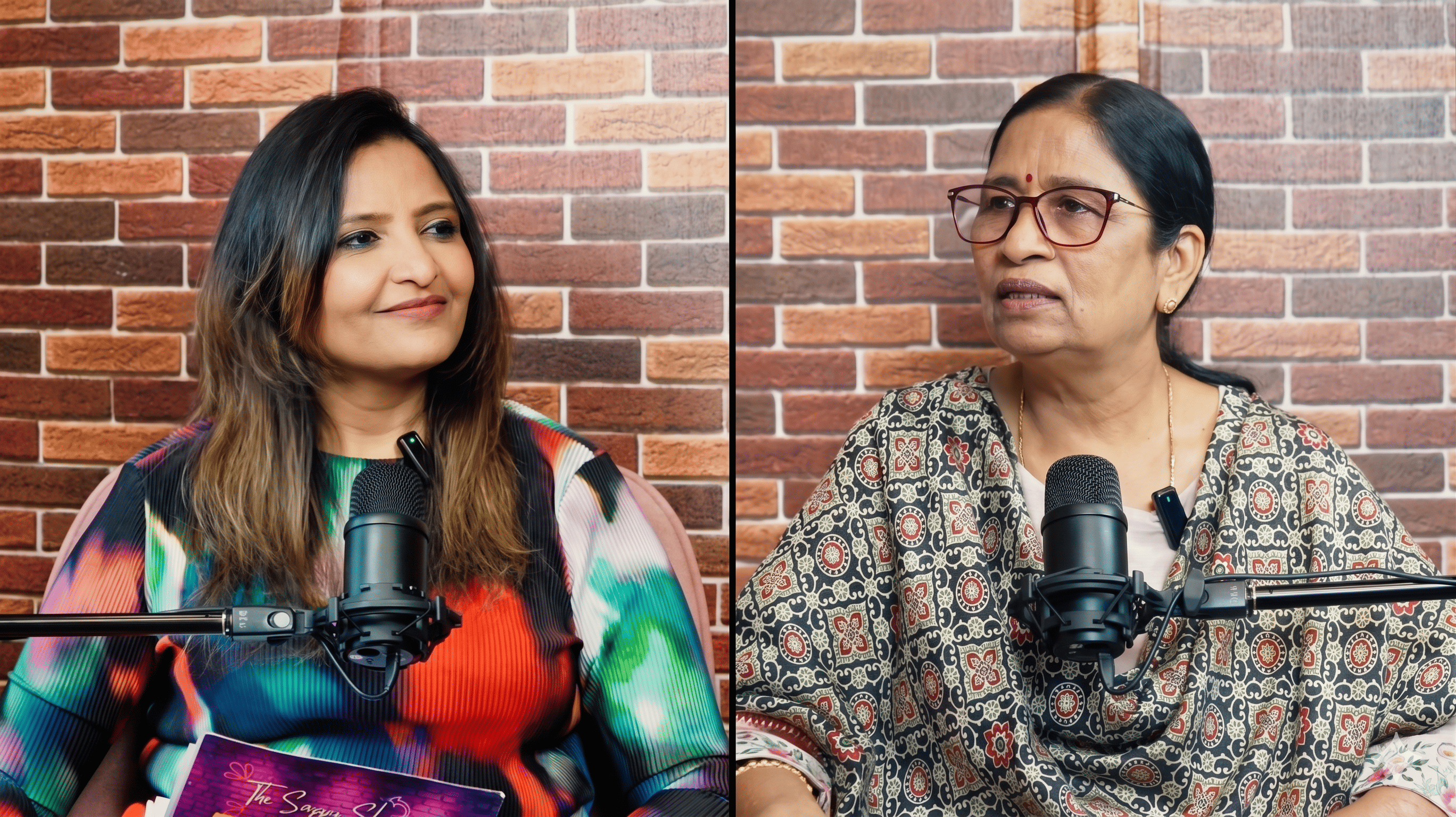
That man was Kamlesh Chavan's husband. That experience, combined with her own recovery from painful varicose veins through the same technique, set her on a path that has lasted four decades and has touched, by her account, over one million patients across India. In a recent conversation on the Ek Soch Podcast with host Nirale Pandya, Kamlesh — a neurotherapist and founder of Aarogya Vikas Neurotherapy Centres — walked through what neurotherapy is and how it works, the case stories that convince her of its potential, why she believes modern patients are over-dependent on medicines, and her vision of a India where every household understands the body's own capacity to heal.
"Her husband's back pain could only be cured by surgery. Neurotherapy healed it in three months. That experience became a 40-year mission to teach India that the body knows how to heal itself."
The Journey That Became a Mission
Kamlesh Chavan's entry into neurotherapy was not a professional choice. It was a desperate search for an answer that allopathic medicine had already declared impossible.
After her marriage in the late 1970s, her husband developed severe chronic back pain. For more than a decade, the couple pursued every available treatment option: allopathy with hospitalisations, Ayurveda, homeopathy, naturopathy, magnet therapy, acupressure — each provided temporary relief, but none addressed the root. Doctors told them spine surgery was the only real solution.
A client eventually took them to Dr. Lajpat Rai Mehra in Bandra, a neurotherapist who treated her husband with a series of specific pressure-based techniques. Within two to three months, the pain resolved completely. It never returned. That single experience shifted Kamlesh's understanding of what the body is actually capable of, and she asked Dr. Mehra to teach her the points and techniques.
Simultaneously, she was experiencing her own health issue — painful varicose veins — which neurotherapy also healed. The convergence of her husband's recovery and her own convinced her that this was not anecdotal. It was a system that worked, but one that almost no one in India knew about or had access to.
What Neurotherapy Is and How It Works
Kamlesh defines neurotherapy as a pressure-based technique applied to specific body points designed to stimulate organ function, improve blood circulation, and normalise the acid-alkali balance of the body so that nutrients and oxygen can reach damaged cells.
It is different from general acupressure, she argues, because it operates from a defined scientific logic. For each disease — diabetes versus heart disease versus arthritis — there is a specific protocol determining which points to stimulate, which to avoid, for how long, and with what timing. A standard treatment might involve six-second pressures applied to particular zones repeated a specific number of times based on the condition and the person's response.
Neurotherapy does not prescribe medicines. Instead, the protocol involves adjusting diet, water intake, sunlight exposure, and basic movement while the therapist performs the pressure techniques. The underlying philosophy is that medicines like dopamine or serotonin are already produced inside the body. Neurotherapy's role is to restore the internal systems so that the body produces and utilises these substances correctly rather than relying on external chemical supplements.
The Body's Systems and How They Connect to Disease
Kamlesh uses mechanistic explanations to describe how she believes neurotherapy addresses disease.
For pain and conditions like slip disc, she links the problem to nutrient deficiencies — vitamin D, B12, calcium — combined with poor circulation and muscle spasms caused by undernourished cells essentially signalling distress. Neurotherapy aims to improve digestion, blood flow, and pH balance so that new, healthier cells form and damaged tissue can regenerate.
For stroke, heart attack, and paralysis, she cites clotting and clot-dissolving factors like heparin, which she argues are naturally produced in the lungs, liver, and throughout all cells. Her protocol for paralysis emphasises stimulating these organs to increase internal heparin-like activity and dissolve fibrin strands in clots. She calls this combination of specific organ points the "internal heparin formula."
She has become particularly focused on the liver after observing, in her own family, widespread post-Covid metabolic issues — fatty liver, high triglycerides, thyroid problems, blood sugar imbalances. Reading research, she concluded that liver health underpins cholesterol regulation, lymph and immunity production, clotting factors, and detoxification. This led her to design liver-focused neurotherapy protocols, which she reports have produced improvements in multiple patients.
The Case That Changed Everything: When Medicine Said No
Kamlesh's case stories illustrate what she sees as neurotherapy's potential in situations where conventional medicine has declared the condition irreversible.
One case involved a 25-year-old man with juvenile arthritis and kidney failure so severe that he was bedridden. Financially strained and without options, his family began home neurotherapy based on Kamlesh's training. Over months, the man improved from bedridden to sitting to walking. When the family could no longer afford clinic sessions, Kamlesh trained his mother to continue the treatments herself. The result was sustained improvement and functional recovery.
A more striking case involved a 12-year-old girl with brain tuberculosis who, after prolonged anti-TB treatment, had lost her sight, hearing, and ability to speak. She was in pain and resistant to further injections. After six months of neurotherapy, Kamlesh reports that the child regained her vision, hearing, and speech and returned to school. Before and after documentation was kept as proof.
A third case involved a patient with neurocysticercosis — cysts in the brain — who had been told by three neurologists that his condition could not be reversed. During the Covid lockdown, Kamlesh trained his son in person over two days in the technique. Ten days of home treatment followed by a follow-up MRI months later reportedly showed normalised function and an MRI that came back normal.
The Broader Claim: Cancer, HIV, and Motor Neuron Disease
Kamlesh also alludes to improvements in more severe conditions like cancer, HIV, muscular dystrophy, and motor neuron disease, though she is more cautious in her language about these.
She does not claim to cure these conditions outright. What she does report is meaningful symptom management: reduced weakness, fewer side effects during chemotherapy, improved quality of life. The claim is about alleviating suffering and improving function within the constraints of serious illness, not about providing cures.
She acknowledges that formal clinical evidence is sparse. Neurotherapy practitioners have only recently begun publishing research papers. The evidence available consists of patient scans, lab reports, and case documentation — but not randomised trials or the kind of data that would satisfy conventional medical scrutiny. She desires government recognition and official validation precisely because current evidence is testimonial rather than methodologically rigorous.
Why Modern Patients Are Dependent on Medicine
Kamlesh's critique of contemporary healthcare is not that doctors are malicious or incompetent, but that the system keeps patients in the dark about root causes and simple lifestyle corrections.
Patients become "totally dependent" on medications without understanding what their bodies actually need. They are treated as if their bodies are broken machines requiring external chemical fixes rather than as systems with intrinsic capacity to heal if the right conditions are restored.
She stresses that she respects allopathy for diagnosis and for emergency medicine. She does not ask patients to stop chemotherapy, TB medicines, or other essential treatments. What she wants is recognition of neurotherapy as a complementary system addressing what medicines alone cannot — the restoration of the body's own self-healing capacity through improved circulation, organ function, and biochemical balance.
Lifestyle as Foundation: Sleep, Meals, Stress
A recurring theme in Kamlesh's work is that lifestyle and stress are underlying drivers of most chronic conditions.
She identifies urban patterns — poor sleep, irregular meal times, chronic stress — as foundational to disease development. Post-Covid, she observed that metabolic dysfunction spread widely through the population, rooted in disrupted routines and accumulated stress. Gut health and circadian rhythm, she argues, are foundational for disease prevention.
The advice she gives is qualitative rather than prescriptive: eat at regular times, sleep at night, drink adequate water, get sunlight exposure, move the body daily. These are simple interventions that most people know they should do but do not prioritise. In her view, neurotherapy combined with these basic lifestyle corrections produces results that neither alone can achieve.
Women, Independence, and Access to Healing
Kamlesh's personal story also foregrounds the role of women in building independent livelihoods in healing professions.
She balanced joint-family responsibilities, raising three daughters, and navigating an initially unsupportive environment. Her husband eventually encouraged her to pursue neurotherapy as both passion and livelihood. After his death in 2001, she used her work to finance her daughters' higher education and marriages, becoming economically independent through her healing practice.
This experience convinced her that women with limited formal education — 10th or 12th standard — can build meaningful careers in neurotherapy, yoga, or naturopathy. The work is accessible, has genuine social impact, and provides genuine income and autonomy.
She also insists that ideally one person in every household should learn basic neurotherapy so they can manage minor issues like headaches, colds, and fevers at home. This democratisation of basic healing knowledge would reduce medical bills and reliance on medicines and would provide immediate relief when hospital access is limited, as happened during Covid lockdowns.
Building the Movement: Training, Centres, and Vision
Kamlesh describes how Dr. Mehra built an ashram and neurotherapy academy near Mumbai where students lived in a gurukul-style residential setup for six months with no television, newspapers, or phones, focusing on anatomy, physiology, and hands-on practice while participating in daily rituals.
She co-founded this academy as a trustee and has taught there and in city clinics for decades. To accommodate women and working professionals who could not attend the ashram, she launched separate training batches in Vashi and Andheri around the early 2000s. The current path involves 1 to 1.5 years of theory and practical work plus six months of internship, after which trainees work at her centres or open their own clinics across India. Some have stayed with her for over a decade, drawn by both earnings and the family-like environment.
She runs multiple Aarogya Vikas Neurotherapy Centres and organises annual three-day seminars where therapists nationwide share case studies, learn to interpret medical imaging, and are reminded of ethical commitments like treating poor patients at low or no cost. The community celebrates their guru's birthday annually with large local gatherings.
The Vision: Neurotherapy as India's Gift
Kamlesh's stated vision is to spread awareness of neurotherapy across India, formalise research and documentation, and secure government recognition so the system is protected as Indian intellectual property rather than patented abroad as a foreign discovery.
She frames neurotherapy as distinctly Indian, low-cost, and scalable. If one member of each family learned basic neurotherapy — not as a replacement for medicine but as a complement to it — chronic suffering could be dramatically reduced. The approach combines self-understanding, lifestyle discipline, and a structured, touch-based healing practice that costs far less than pharmaceutical interventions.
The mission is not to replace modern medicine. It is to restore balance: to give people agency in their own healing, to reduce unnecessary medication dependence, and to revive an understanding that the body is designed to heal itself if its systems are properly supported.
Nirale Pandya
Entrepreneur | Podcaster
"I help businesses grow through strategic PR, Branding, Business Consultation, Social Media Management, Digital Marketing, and Podcasting."
📅 Book a One-to-One Business Consultation:
Schedule Your Session🔗 Connect With Me