Mumbai: Most people approach fitness as a transaction with the body: lose weight, gain muscle, achieve the aesthetic that proves you are doing it right. Post that, the work stops. The aesthetic fades. The discipline collapses. The body returns to its previous state. The entire cycle was exhausting because it was built on the wrong foundation.
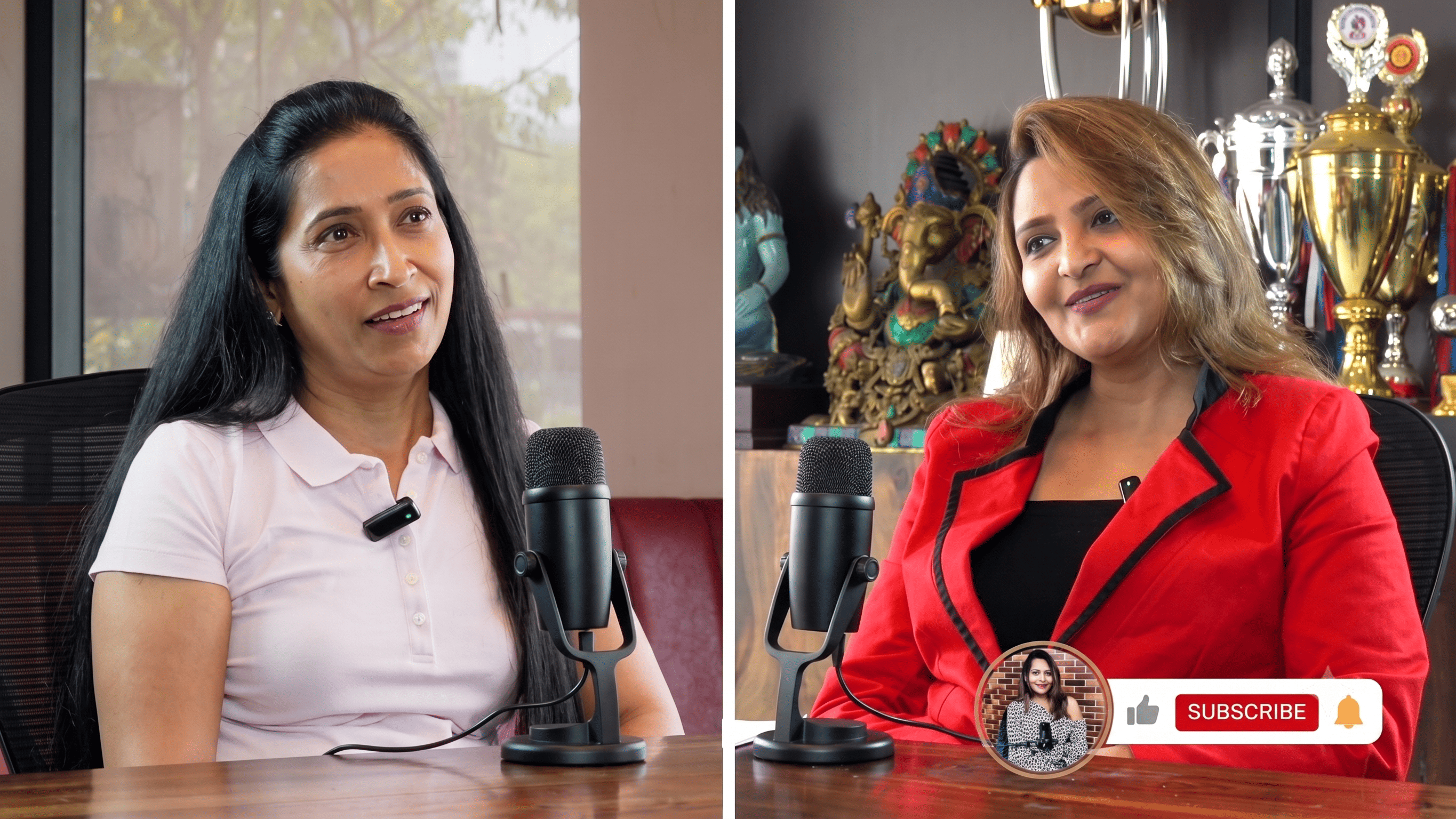
Nital Raval approaches fitness as something else entirely — as a practice that transforms not just the body, but the mind, the emotional state, and the spiritual centre. In a recent conversation on the Ek Soch Podcast with host Nirale Pandya, Nital — founder of Byrhythm Fitness Studio, India's first Aerial Yoga Master, and builder of 24 franchises training 160+ instructors — walked through her personal transformation from post-pregnancy lethargy to becoming a fitness pioneer, why she brought aerial yoga to India, how going upside-down actually heals the spine and the mind, and why the women approaching 40 are the ones who need this work the most urgently.
"At 53, she looks radiant not because of makeup, but because consistency in movement creates an aura that no cosmetic can replicate. Her secret is simple: fitness is not for your body. It is for your spirit."
The One Idea: Serve People So Genuinely That Blessings Come
Nital identifies her core belief as the foundation of everything she has built: serve people so genuinely that blessings come without asking.
She did not start Byrhythm to build a business. She started it because she wanted to give something that healed people from within. Not aesthetic transformation. Not temporary weight loss. But genuine healing — physical, mental, emotional, and spiritual.
This intention shaped how she approached every decision. She was not optimising for profit margins or for scale. She was optimising for whether the work actually helped the person. Everything else — the business success, the franchises, the reputation — emerged as a consequence of that genuine focus on service.
The Turning Point: Refusing to Accept Fate
Nital's own fitness journey began not from vanity but from observation and refusal.
After her second delivery, she felt heavy and lethargic. The exhaustion was not just physical. It was existential. She looked at her mother struggling with the accumulated weight of age and sedentary living, and she made a decision: she would not accept that as her fate. She would not become that.
She started yoga — not because she had read about its benefits or because it was trending. She started because she needed to feel alive again. She needed to move, to breathe, to change the trajectory she was on.
The changes that followed were not primarily aesthetic. Yes, the weight shifted. But what transformed first was her mind. Her breath patterns shifted. Her emotional responses shifted. Her entire relationship with her body shifted from resentment to gratitude.
She realised that yoga was not just for women or just for men or just for children. It was for everyone who felt disconnected from their own body and who wanted reconnection.
Building Byrhythm: Aligning Each Person's Biological Rhythm
Nital registered Byrhythm Fitness Studio in 2007 with a specific mission baked into the name: helping each person balance their biological rhythm.
The concept of rhythm is central to her philosophy. The body operates on rhythms — circadian rhythms, hormonal rhythms, energy rhythms. Most people ignore these rhythms and try to force their bodies into external schedules. The result is constant friction, fatigue, and disconnection.
Byrhythm was built to honour these rhythms. Different people need different practices at different times. A person in their twenties needs different work than a person in their fifties. A person approaching menopause needs different work than a person in early recovery from illness.
The studio scaled from a personal practice to 24 franchises and 160+ trained instructors across India precisely because this philosophy resonated. People felt seen. They felt like their individual rhythm was being acknowledged rather than ignored.
The Deep Lesson: Teaching Special Needs Children
One of Nital's most transformative experiences came from teaching special needs children — some of whom would shout and sing mid-class, some of whom could not sit still, some of whom had their own entire world they were inhabiting.
These children taught her patience in its deepest form. She learned that a teacher's job is not to control the environment or to force compliance. A teacher's job is to keep giving, regardless. To keep offering the practice, knowing that every person receives it differently, and that "different" does not mean wrong.
This lesson fundamentally shaped how she approached all teaching. Not every student would have the "correct" form. Not every student would progress at the expected pace. Not every student would have the experience she expected them to have. Her job was to keep offering, to keep supporting, and to trust that each person was receiving what they needed.
Discovering Aerial Yoga: Bringing Inversion Therapy to India
Nital wanted to bring something new to India — something that would make yoga feel fresh and accessible to people who thought yoga was boring or slow or only for the spiritually inclined.
She researched and discovered Aerial Yoga being practised in the United States. She had a friend scout the location first to verify safety. Then she learned the practice herself. Then she brought it back to India as the country's first certified Aerial Yoga instructor.
The impact was immediate. Aerial yoga looked dramatic. It was visibly different from traditional yoga. It attracted people who might never have entered a traditional yoga studio. But beneath the visual drama was genuine healing — the practice addressed problems that traditional yoga took longer to resolve.
How Aerial Yoga Heals the Spine
Nital explains the biomechanics of why aerial yoga produces such rapid results for spinal and postural problems.
Most people sit or stand all day. Both positions compress spinal discs. Over time, discs bulge unpredictably — sometimes bulging toward a nerve, causing sciatica or other radiating pain. The body is essentially being compressed by gravity and by position, creating a downward force on the spine constantly.
Aerial yoga reverses this. In a silk hammock, you hang from your hip bones. Your body weight is supported at the widest point of your pelvis. Your spine extends naturally. Gravity, which was compressing the spine, now decompresses it. Discs that were bulging begin to return to their proper position. Nerves that were being pressed stop being pressed.
The effect is not gradual. People often report relief within a single session. Within a week of consistent practice, changes become permanent.
This is why aerial yoga produces results for sciatica, lumbar issues, cervical problems, anxiety, and stress so rapidly. The body is being given an experience it almost never gets in modern life: spinal decompression and inversion.
Aerial Yoga for Menopause: Blood Flow to the Brain
During menopause, the body is not just undergoing physical changes. The mind is shifting. The emotional state is shifting. Hormones that have regulated mood and energy for decades are disappearing. The disorientation is profound.
Going upside-down in aerial yoga directly sends blood to the brain. This activates the parasympathetic nervous system and releases endorphins and serotonin. The effect is immediate stress relief, immediate mood elevation, and immediate calming of the racing mind.
For women in menopause, aerial yoga becomes one of the most powerful tools available. It is not a permanent solution to menopause. But it provides relief during a phase when relief is desperately needed.
Women Nearing 40: Proactive Intervention
Nital emphasises that the approach to fitness should shift as a woman approaches 40.
The hormonal changes of the late thirties — mood swings, energy dips, shifts in how the body responds to food and exercise — are best managed proactively. Waiting until these changes become pronounced problems is the wrong strategy.
The woman who begins aerial yoga practice in her late thirties is not addressing a crisis. She is supporting her body through a transition. She is maintaining muscle, maintaining spinal health, maintaining hormonal balance, and maintaining mental resilience as her body shifts.
This proactive approach prevents the crisis that many women experience in their forties and fifties, when the accumulated neglect of their bodies during transition suddenly becomes a medical problem.
The Equipment and the Safety
Nital addresses common fears about aerial yoga: the fear of falling, the fear of whether the equipment is safe, the fear of whether a person needs to be already fit to begin.
The silk hammocks used at Byrhythm are rated for 500 kilograms. She has safely taken people up to 140 kilograms upside-down. The equipment is safe. The practice is safe when taught by certified instructors.
No prior fitness experience is required. You do not need to "get fit first" before starting aerial yoga. You start where you are. The practice meets you there.
The Emotional Release: Crying, Laughing, Healing
Nital shares her own experience of the emotional release that aerial yoga produces.
When she first went upside-down in the United States, she cried — not from fear, but from a rush of happy hormones and from the profound relief of the spinal decompression. The tears were cathartic.
This happens regularly in Byrhythm classes. People laugh. People cry. People enter states of deep calm that they have rarely experienced. The physical decompression creates the conditions for emotional release that the person may have been carrying for years.
This is why she frames aerial yoga as holistic healing, not just physical therapy. The body and the mind are not separate. When you decompress the spine, you are also decompressing the nervous system, which creates space for emotional material to move and release.
Real Transformation: The Woman Carried to the Studio
A woman from Manipal arrived at the studio carried by two people. She had severe sciatica and a surgery was scheduled. She was in pain so significant that she could not walk unassisted.
Nital created a protocol combining aerial yoga and floor yoga, tailored to her condition. After seven days of this intensive practice, the woman was walking on her own. The compression was releasing. The pain was receding. Surgery was cancelled.
This is not an isolated case. This is a pattern Nital observes repeatedly: people arrive with problems they have been told require surgery, and the problems resolve through consistent practice.
Yoga During Pregnancy and Postpartum
Aerial yoga is not recommended during pregnancy — the inversion and spinal decompression can stress a pregnancy. But traditional yoga practised throughout all nine months is highly beneficial. It supports hormonal balance. It supports the baby's oxygen supply. It facilitates recovery after delivery.
Several Byrhythm clients have practised traditional yoga all nine months and delivered without complications. The movement and breath work prepare the body for the demands of pregnancy and childbirth.
The 21-Day Rule: How Habit Actually Forms
Nital emphasises that motivation is a myth. What works is a consistent plan that becomes habit.
Traditional yoga wisdom teaches that 21 days of consistency creates visible change. Nital encourages people to commit to 21 days, not forever. Just 21 days. See what happens.
She encouraged a friend to try just 21 days of early waking and practice. It worked. The friend discovered that what felt impossible for one day became automatic by day 21. The neural pathways rewired. The resistance disappeared.
Early waking and consistent practice were not easy for Nital either. But she pushed anyway. Now she wakes at 4 AM without an alarm, spending 4 to 6 AM entirely on herself — meditation, rituals, stillness. The habit built. The motivation followed the habit, not the reverse.
Activity Increases With Age, Not Decreases
Nital has completed Everest Base Camp, the Annapurna Circuit, and three half marathons — all while running her studio and maintaining daily practice.
Her principle is that activity should increase as you age, not decrease. Most people have it backwards. They are active when young, then gradually reduce activity as they age, accepting the decline as inevitable. By the time they reach 60, they are essentially sedentary.
Nital's approach is the opposite: be active now, be more active later. The body responds to the signal you give it. If you signal that you are declining, it declines. If you signal that you are still active, it remains active.
Offline Yoga Versus Online: The Correction Factor
Online yoga is not bad — it is accessible and it is better than nothing. But a person learning yoga online might take years to see results because their form is not being corrected. Small misalignments accumulate. The practice becomes less effective.
Offline yoga with a present instructor produces results within a month because corrections happen immediately. The instructor sees a slight hip tilt or a misaligned knee and corrects it. The correction is embedded in that practice session. Results compound faster.
Watch the Full Episode
The complete conversation with Nital Raval covers her post-pregnancy transformation, building Byrhythm studio, bringing aerial yoga to India, the biomechanics of spinal decompression, aerial yoga for menopause and women approaching 40, equipment safety, the emotional release that practice produces, the woman carried to the studio who cancelled her surgery, yoga during pregnancy, the 21-day habit rule, increasing activity with age, and why offline yoga produces faster results than online.
Nirale Pandya
Entrepreneur | Podcaster
"I help businesses grow through strategic PR, Branding, Business Consultation, Social Media Management, Digital Marketing, and Podcasting."
📅 Book a One-to-One Business Consultation:
Schedule Your Session🔗 Connect With Me