
He had no dance-oriented childhood. Then YouTube, virality, and a business model turned passion into a movement designed to reach millions.
Nashik: Most people do not think of dance as a business. They think of it as an art, a performance, a cultural expression — something that either pays sporadically or requires you to become famous to earn sustainably. Tejas Dinesh Dhoke thinks differently. He sees dance as an unorganized industry, which means it is an industry waiting to be systematized.
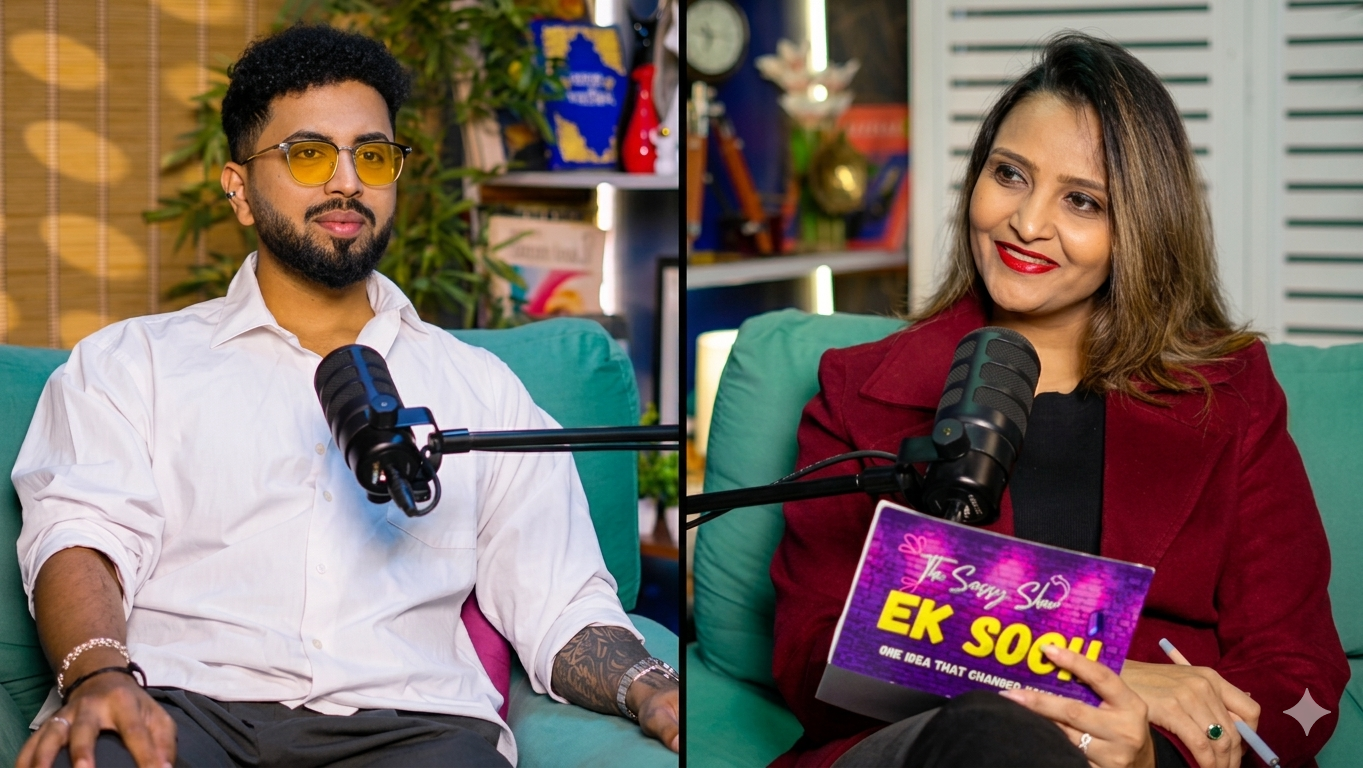
In a recent conversation on the Ek Soch Podcast with host Nirale Pandya, Tejas — founder of Dance Fit App, creator behind viral dance content, and architect of Nritya Sadhana, a structured daily practice model for dance — walked through his journey from a late start in dance to building a bootstrapped business that serves thousands, and his vision of making dance a household wellness practice rather than a performer's specialty.
"He had no dance-oriented childhood. Then YouTube, virality, and a business model turned passion into a movement designed to reach millions."
Finding Identity Through an Unexpected Passion
Tejas Dinesh Dhoke did not grow up in a dance-oriented family. Dance was not part of his childhood, his education, or any path that had been planned for him. What dance became, unexpectedly, was the first thing that made him feel distinct and confident — the first thing that was entirely his own.
The discovery came late, without the foundation of formal training that most dancers carry. He learned heavily through YouTube, watching tutorials, breaking down choreography, and absorbing the language of movement piece by piece rather than through institutional training. The unconventional entry point, rather than being a limitation, became an asset — he saw dance through an outsider's eyes and approached it with the problem-solving orientation of someone learning from first principles rather than from tradition.
Virality as Catalyst, Not Destination
Around 2016 to 2018, Tejas's videos started going viral. The view counts grew rapidly. The inbound messages became relentless. Commercial opportunities arrived — Sony Music collaborations, Bollywood-related choreography work, brand partnerships that came because of the visibility he had built.
Tejas is precise about what virality actually provided and what it did not. Virality provided visibility and opportunity. It did not provide lasting relevance or sustainable income. The creators who sustain beyond a viral moment, he argues, are the ones who paired the initial visibility with genuine passion, consistent reinvention, and the commitment to remain useful beyond the trend cycle.
Seeing Dance as an Unorganized Industry
The conceptual shift that led to Dance Fit App came when Tejas stopped seeing dance only as a creative expression and started seeing it as an industry — one that lacks the systematization that has already transformed education, sports, and music.
Education has standardised curricula, certifications, and progression pathways. Sports has organised leagues, structured training programs, and measurable performance metrics. Music has scales, notation systems, and equipment standards that allow knowledge to be transmitted consistently. Dance, despite being as significant culturally and developmentally as any of these fields, remains largely unorganised.
The Vision: Nritya Sadhana
The most distinctive element of Tejas's long-term thinking is Nritya Sadhana — a structured daily practice model that treats dance not as a performance art but as a wellness and personal development practice.
The framework involves several distinct phases: steadiness, where the body learns how to be grounded and present; breath-body coordination; emotional expression through navarasa; surrender; and closing meditative stillness.
Advice to Creators: Stop Chasing Viral
Tejas's message to young creators is pointed: Stop obsessing over becoming viral. Focus instead on persistence — showing up consistently, doing better work, and reinventing as platforms change and as your own capabilities grow. Viral moments are real and valuable, but they are not the goal. The goal is to build something that lasts, that matters, and that is actually useful to people.
Nirale Pandya
Entrepreneur | Podcaster
"I help businesses grow through strategic PR, Branding, Business Consultation, Social Media Management, Digital Marketing, and Podcasting."
📅 Book a One-to-One Business Consultation:
Schedule Your Session🔗 Connect With Me
Published: May 5, 2026 | Category: Podcast